
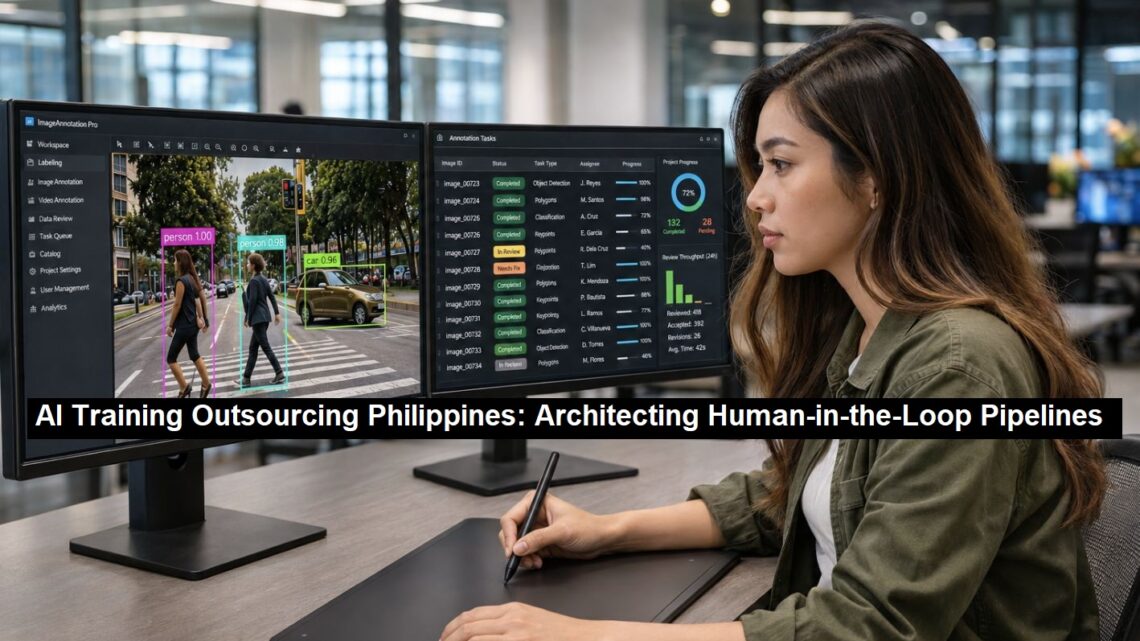
AI Training Outsourcing Philippines: Architecting Human-in-the-Loop Pipelines
November 20, 2026As foundation models move from general-purpose chat interfaces into regulated enterprise workflows, model performance is increasingly bottlenecked not by compute clusters, but by the quality of human feedback and domain-specific evaluation data. Pre-training on public web corpora has hit diminishing returns. Today, competitive differentiation depends on post-training pipelines—specifically supervised fine-tuning (SFT), reinforcement learning from human feedback (RLHF), and adversarial red-teaming.
For U.S. engineering and machine learning leaders, building large internal annotation teams is capital-inefficient, while relying on anonymous gig-economy crowds creates quality drift and data leakage risks. Technical buyers are therefore restructuring how they source human-in-the-loop (HITL) infrastructure, turning to specialized advisory firms such as PITON-Global in the Philippines, which maintains direct partnerships with the country’s leading AI training and data annotation providers.
“Enterprise AI teams have realized that throwing millions of anonymous crowd clicks at a frontier model creates statistical noise rather than intelligence. Through our network of the top AI training partners in the Philippines, we help U.S. engineering organizations replace erratic gig labor with dedicated, domain-vetted data operations that function as a true extension of their MLOps stack,” says John Maczynski, CEO of PITON-Global, a BPO advisory firm focused on AI outsourcing to the Philippines.
How Does AI Training Outsourcing in the Philippines Support Production Machine Learning Pipelines?
AI training outsourcing in the Philippines provides U.S. enterprises with dedicated, full-time teams of college-educated specialists who execute structured data labeling, multimodal annotation, RLHF preference ranking, and model evaluation within secure delivery centers. Unlike transactional gig platforms, these managed teams integrate directly into client MLOps workflows with calibrated quality assurance and strict IP controls.
The operational shift reflects a broader transformation across the Philippine IT-BPM sector, which by the end of 2026 exceeds $40 billion in annual export revenue and employs nearly 1.97 million professionals. Rather than focusing solely on traditional voice support, specialized delivery hubs in Metro Manila, Cebu, and Davao have evolved into dedicated data engineering and AI operations centers.
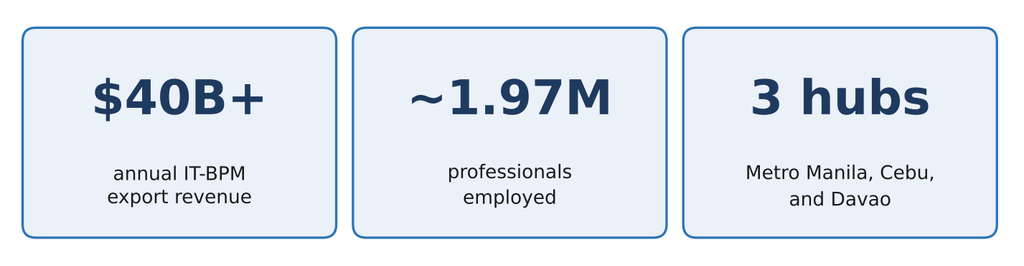
Figure 1. The Philippine IT-BPM sector at a glance
For production machine learning teams, this infrastructure supports four distinct layers of the model lifecycle:
- Multimodal Ground-Truth Curation: Frame-by-frame LiDAR and sensor fusion annotation for autonomous systems, spatial computing, and industrial robotics.
- Domain-Specific Supervised Fine-Tuning (SFT): Generating high-precision prompt-response pairs authored by credentialed nurses, accountants, legal analysts, and software engineers.
- Preference Modeling and Reward Calibration: Executing multi-turn conversational evaluations where annotators rank model outputs across helpfulness, factual grounding, and tone adherence.
- Adversarial Red-Teaming and Safety Auditing: Systematically probing models for prompt injection vulnerabilities, policy bypasses, and subtle hallucination patterns before production deployment.
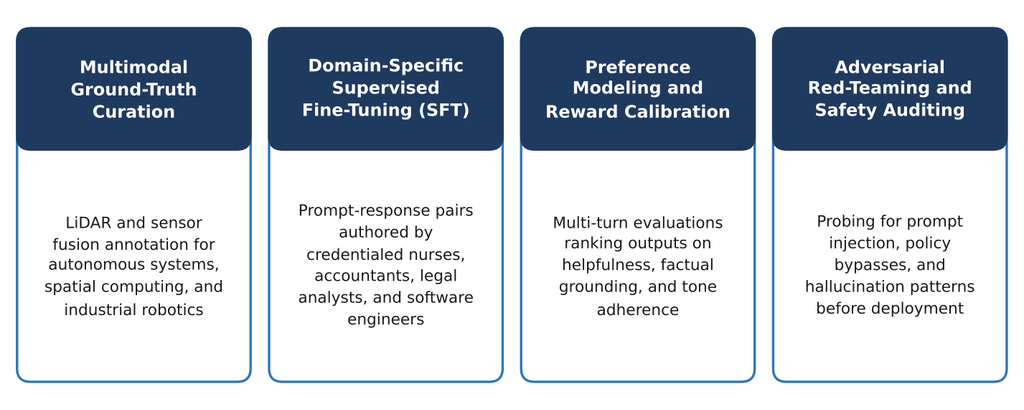
Figure 2. Four layers of the model lifecycle supported by managed Philippine teams
Because these teams operate as dedicated full-time employees rather than transient task workers, engineering leads can train annotators on complex, multi-page rubric guidelines that evolve alongside weekly model checkpoints.
Why Are U.S. AI Labs Shifting LLM Training Outsourcing to the Philippines Over Crowdsourced Platforms?
U.S. AI labs are moving LLM training outsourcing to the Philippines because crowdsourced gig platforms fail on multi-turn reasoning, domain nuance, and data security. Managed Philippine teams eliminate random crowd variance through rigorous candidate screening, live calibration sessions with client ML engineers, and dedicated quality assurance layers that maintain high inter-annotator agreement.
Crowdsourcing platforms rely on statistical redundancy—paying three to nine anonymous workers to label the same prompt and taking a majority vote. While majority voting works well for elementary tasks like bounding boxes or binary sentiment classification, it breaks down completely in generative AI evaluation. When evaluating complex code generation, financial modeling, or clinical summarization, an untrained crowd shares the same underlying knowledge gap. Multiplying nine underqualified votes does not produce ground truth; it simply amplifies consensus error at nine times the unit cost.
Furthermore, linguistic and cultural alignment plays a decisive role in generative AI performance. English is an official language of instruction and commerce in the Philippines, and decades of close operational integration with U.S. enterprises have produced a workforce fluent in American idioms, legal terminology, healthcare workflows, and consumer expectations. When annotators evaluate subtle tonal shifts or detect hallucinations in U.S.-centric business contexts, comprehension friction drops dramatically.
Crucially, managed delivery models allow direct feedback loops. When an annotator flags an ambiguous edge case in a rubric, team leads can surface that pattern to the client’s research scientists within hours—turning annotation from a passive labeling exercise into an active diagnostic tool for model behavior.
Read: Back-End Architecture for Growing Applications: What Should You Plan for Early?
What Quantitative Quality and Retention Metrics Separate Managed Philippine Teams from Gig Crowds?
Dedicated, managed Philippine AI annotation teams achieve 75% to 85% annual staff retention—outperforming traditional voice call centers (45% to 50% attrition) and eliminating the continuous retraining churn of anonymous gig crowds. High workforce stability preserves institutional rubric knowledge, keeping inter-annotator agreement (Cohen’s kappa) consistently above 0.85 across complex evaluation tasks.
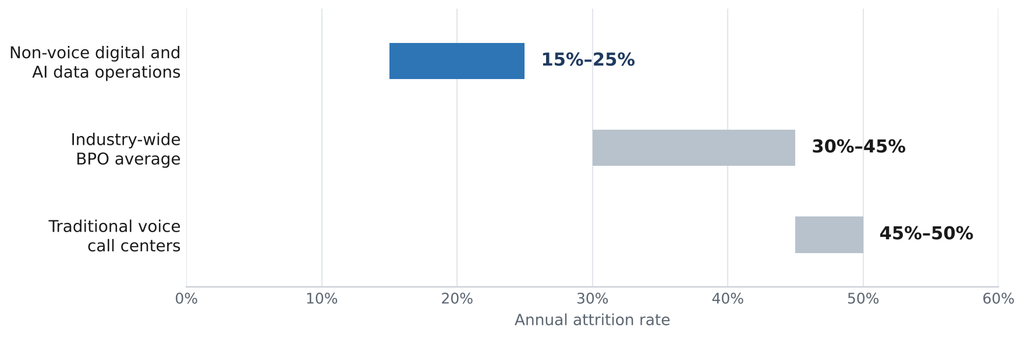
Figure 3. Annual attrition ranges by type of operation
In machine learning operations, annotator churn is an invisible tax on model accuracy. Every time a gig worker leaves a project, subtle interpretations of edge-case guidelines vanish with them. Engineering managers end up spending sprint cycles re-explaining basic rubric logic instead of iterating on model weights.
According to Ralf Ellspermann, CSO of PITON-Global, “In post-training pipelines, workforce retention is directly correlated with model convergence. When annual retention sits at 80% instead of the revolving door of crowdsourced marketplaces, annotators internalize complex edge-case rubrics—cutting rework rates by more than half and driving inter-annotator agreement above 0.85 on multi-turn reasoning tasks.”
Industry benchmarks highlight why location strategy and workforce structure dictate pipeline stability:
- Non-Voice Retention Advantage: Non-voice digital and AI data operations in the Philippines consistently post annual attrition rates between 15% and 25% (75% to 85% retention), compared to the 30% to 45% industry-wide BPO average.
- Regional Hub Stability: Delivery centers located in secondary tier-one hubs outside Metro Manila—such as Cebu, Iloilo, and Davao—regularly achieve 10 to 15 percentage points higher retention than capital-city operations on identical technical workflows.
- Redundancy Cost Efficiency: On complex domain reasoning tasks, paying a single vetted, full-time specialist in a managed team frequently costs less per validated token than paying seven to nine crowdsourced workers to achieve comparable statistical confidence.
Table 1. Anonymous crowdsourced platforms versus managed Philippine AI delivery teams
| Pipeline Dimension | Anonymous Crowdsourced Platforms | Managed Philippine AI Delivery Teams |
|---|---|---|
| Quality Mechanism | Statistical redundancy (3x–9x voting) | Selective hiring, domain testing, and two-tier QA |
| Workforce Retention | High churn; project-by-project turnover | 75%–85% annual retention on AI data lines |
| Rubric Complexity | Limited to static, single-turn micro-tasks | Supports evolving, multi-turn reasoning rubrics |
| Security Architecture | Open web browser access; distributed home devices | Biometric facilities, VDI isolation, zero-trust DLP |
| Regulatory Compliance | Unsuitable for PII, PHI, or proprietary weights | HIPAA, SOC 2 Type II, ISO 27001, and GDPR compliant |
| Engineering Feedback | Asynchronous ticket queues; minimal context | Real-time Slack/Teams calibration with ML leads |
How Do Enterprise Delivery Centers Secure Proprietary Weights, PII, and Regulated Datasets?
Enterprise AI delivery centers in the Philippines secure sensitive datasets through physical clean-room environments, Virtual Desktop Infrastructure (VDI), biometric access controls, and strict compliance certifications, including SOC 2 Type II, ISO 27001, and HIPAA. Data never resides on local endpoints, preventing unauthorized downloads, screen captures, or model prompt leakage.
For healthcare, fintech, and enterprise software companies fine-tuning proprietary models, data governance is often the primary barrier to external annotation. Sending unredacted patient records, proprietary codebases, or pre-release model outputs into an open crowdsourced marketplace violates enterprise risk mandates and invites intellectual property exposure.
Mature Philippine delivery facilities mitigate these vulnerabilities through layered physical and technical controls:
Table 2. Layered physical and technical controls in mature Philippine delivery facilities
| # | Control | How It Works |
|---|---|---|
| 1 | Zero-Trust Endpoint Isolation | Annotators work within locked-down VDI environments where USB ports, local storage, copy-paste functions, and external internet access are disabled at the hypervisor level. |
| 2 | Clean-Room Physical Governance | Production floors enforce device-free policies monitored by physical security and automated camera analytics to eliminate unauthorized mobile photography of sensitive prompts. |
| 3 | AI Management Standards | Leading operators are aligning governance frameworks with ISO/IEC 42001 (Artificial Intelligence Management Systems) alongside established ISO 27001 and PCI-DSS protocols, establishing auditable chain-of-custody logs for every labeled record. |
| 4 | Geographic Business Continuity | Because the Philippine archipelago experiences seasonal typhoons and seismic events, mature providers distribute annotation pods across geographically separated power grids—such as pairing a Metro Manila hub with a Visayas or Mindanao facility—to guarantee uninterrupted SLA uptime. |
Which Workstreams Belong in a Hybrid Data Annotation and Fine-Tuning Architecture?
Engineering leaders should route high-volume, low-context preprocessing tasks to automated pipelines or crowdsourced pools while reserving managed Philippine teams for high-judgment RLHF, domain-specific SFT, and adversarial auditing. This hybrid architecture optimizes unit economics without sacrificing ground-truth precision on mission-critical model behaviors.
Treating all training data as a single procurement bucket leads to either overspending on simple tasks or underinvesting in complex reasoning. A disciplined MLOps architecture segments data pipelines by cognitive complexity and security sensitivity:
- Tier 1 — Automated & Synthetic Pre-Labeling: Use frontier teacher models and deterministic scripts to handle initial entity extraction, deduplication, and synthetic prompt generation.
- Tier 2 — Crowdsourced Micro-Tasks: Route unambiguous, non-sensitive tasks—such as basic image segmentation or clear-audio transcription—to distributed crowd pools where three-worker consensus reaches 97%+ accuracy within hours.
- Tier 3 — Managed Philippine Specialist Pods: Direct all proprietary enterprise data, multi-turn conversational evaluations, code debugging rubrics, and regulated domain tasks to dedicated Philippine teams where human domain expertise, low attrition, and clean-room security protect model integrity.
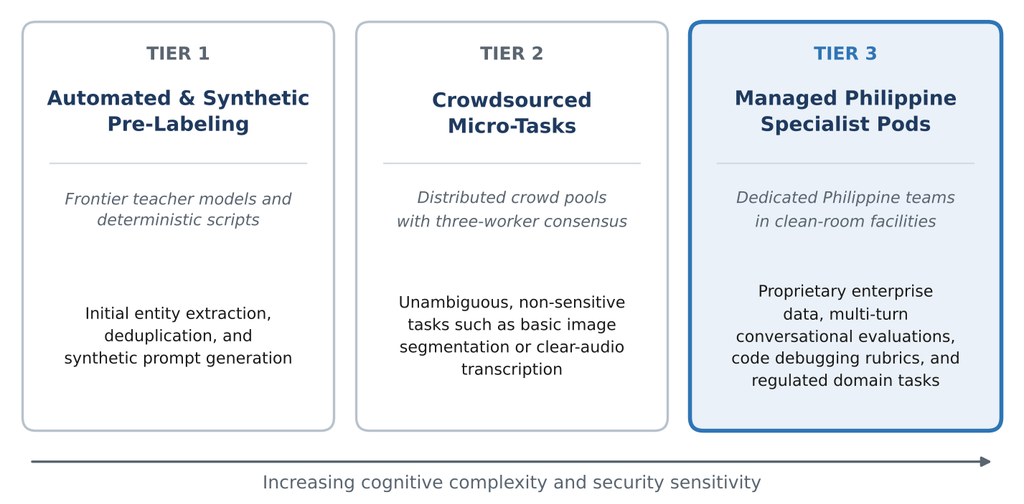
Figure 4. Three-tier hybrid architecture for routing training-data workstreams
Implementation Checklist for Technical Buyers
Before signing a statement of work with an AI data partner, ML engineering leads should validate four operational prerequisites:
Table 3. Four operational prerequisites to validate before signing a statement of work
| Prerequisite | What to Validate |
|---|---|
| Run a Paid Golden-Dataset Calibration | Test prospective teams on 500 pre-scored edge-case prompts to measure raw baseline agreement and speed of rubric adaptation before scaling headcount. |
| Audit Team Lead Ratios | Verify that the vendor maintains at least one dedicated quality assurance reviewer or team lead for every eight to ten production annotators. |
| Require Regional Site Redundancy | Confirm that delivery capacity can fail over across at least two independent regional hubs in the Philippines. |
| Verify Data Residency and VDI Logs | Inspect SOC 2 Type II audit reports specifically for endpoint data-loss prevention (DLP) and VDI session logging. |
“The biggest mistake U.S. enterprises make is treating AI data vendor selection like a generic call-center RFP. Out of hundreds of BPOs in the Philippines, only a select tier possesses the clean-room security, engineering leadership, and domain-calibrated talent required for production LLM fine-tuning—which is why objective, data-driven partner matching across multiple providers is essential before committing training budgets,” concludes Maczynski.