
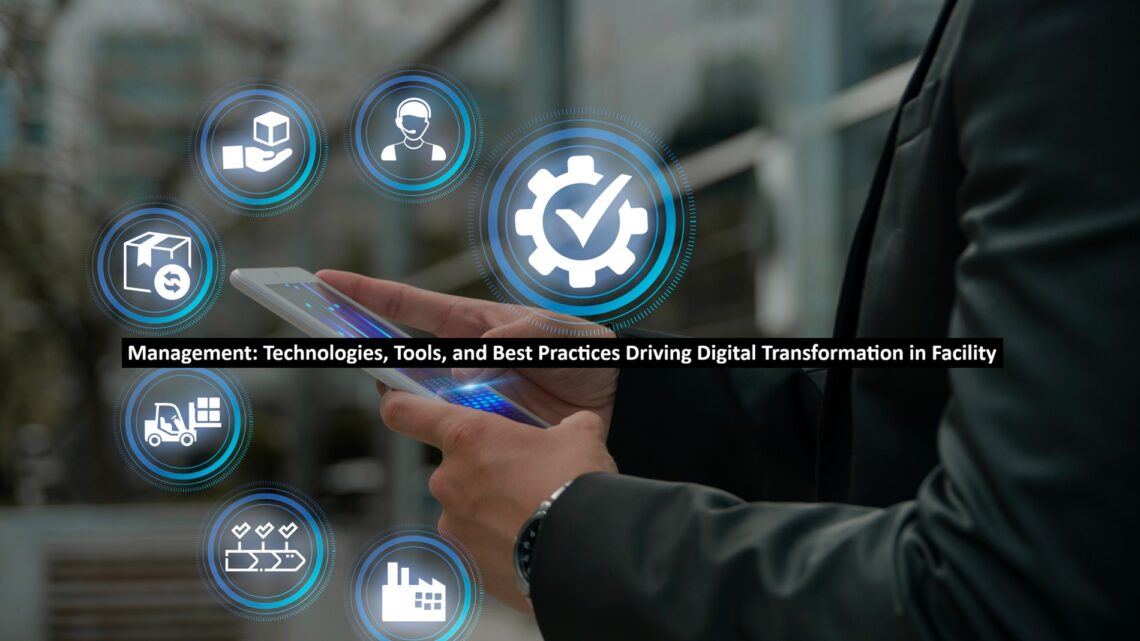
Management: Technologies, Tools, and Best Practices Driving Digital Transformation in Facility
January 19, 2026The architectural image of Facility Management (FM) remained the same decades long: the technician in the basement, his wrench in his hand, until a boiler breaks down or someone calls the phone. It was a reactive vocation, which entailed extinguishing fires, even literally.
The contemporary facility manager does not spend time struggling with a rusty valve but rather analyzes the patterns of energy consumption on a tablet. We are now in a mindset of fixing something when it goes wrong to a data-driven, strategic approach.
Digital Transformation in FM does not necessarily involve purchasing the most recent devices or smart thermostats. It is a radical change of processes, culture, and thinking. It is the shift towards working on the basis of the gut feelings and complaints to working on the basis of the real-time data and forecast. The transformation is not a privilege of high-tech campuses anymore; today it became a standard of the industry to guarantee efficient work, fulfill the sustainability (ESG) requirements, and provide the comfort of the occupants.
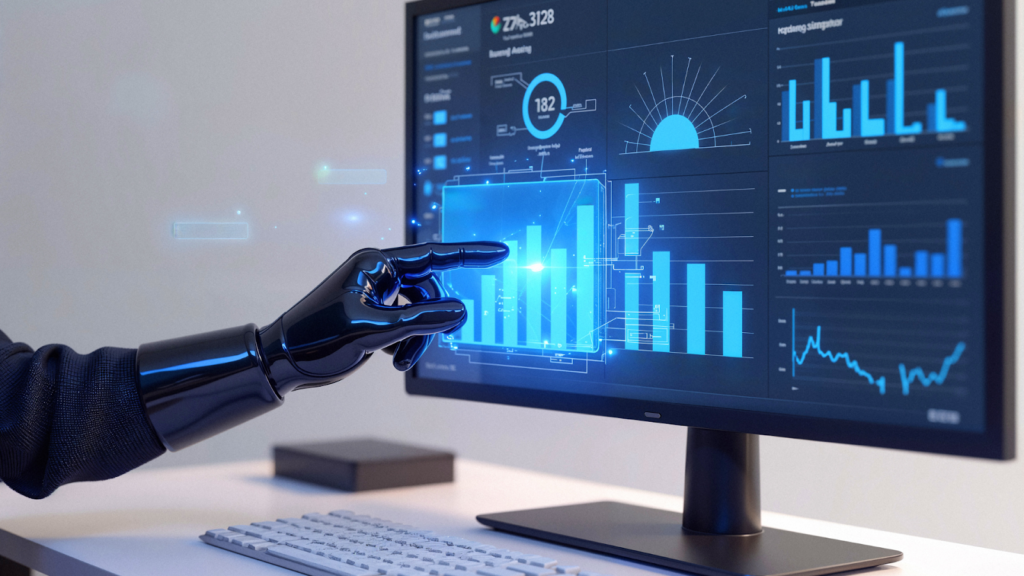
Key Driving Technologies
Among the largest errors that FM leaders commit is to consider technologies independently. Without software to analyze, a sensor is useless; without analysis, software is useless. Digital transformation is based on an integrated ecosystem to succeed.
1. The Internet of Things (IoT)
IoT devices are your building senses. They are the mini spies placed in your portfolio, and they take granular levels of data that cannot be picked by human auditors.
- Core Function: Sensors record real time variables- temperature, humidity, occupancy, vibration and air quality.
- The Shift: This changes the periodic, calendar-based inspections to real-time visibility. You do not even have to walk to the floor to know whether a room is overheating; the room does.
- Synergy: IoT provides raw material (data). Without these sensors, AI and Digital Twins are just empty engines with no fuel.
2. Artificial Intelligence (AI)
When the hay is collected by IoT, the needle will be located by AI. The generated datasets at facilities are large, and human teams cannot handle them manually. Patterns and anomalies are found by AI algorithms filtering through this noise.
- The Shift: This allows the jump between Reactive (fixing what is broken) to Predictive (fixing what is about to break).
- Key Application: AI pushes Predictive Maintenance (PdM). Through vibration curve or heat signature analysis, AI predicts equipment failure, and you can swap a component during planned maintenance, and not during a disastrous failure.
3. Software Systems
All this data needs a home. The Single Pane of Glass is integrated Workplace Management Systems (IWMS) and Computerized Maintenance Management Systems (CMMS).
- Core Function: These platforms bring together the silo-free Operational Umbrella. On a single dashboard, a facility manager will be able to access lease data, maintenance tickets, and energy consumption.
- Interoperability: Modern software is an operating system that ties the legacy equipment (such as the chiller that is 20 years old) with new wireless sensors, converting various protocols into a common language.
4. Cloud & Connectivity
The cloud provides the scalable storage necessary for historical data and enables true mobility.
- Mobility: No longer are the technicians attached to a desktop. They get the CMMS through mobile applications, see schematics, review work orders, and place part orders at the location of the asset.
- Scale: Cloud connectivity enables a central team to operate a variety of sites remotely, including benchmarking performance on a global portfolio.
Read: 7 Key Advantages of Deploying Salesforce CPQ (Revenue Cloud)
The Core Benefits: The “Why”
The capital investment in this ecosystem is needed, but the capital in the form of the return on investment (ROI) is measurable within three main pillars.
A. Financial Gains (The Bottom Line)
Smart interventions go directly to the source of operating expenses (OpEx).
- Energy: With the use of occupancy sensors and the implementation of HVAC, the buildings do not cool down without people in the rooms. A good example is the Empire State Building that managed to cut its energy needs by 38 percent with deep retrofits and computerized optimization.
- Maintenance: AI-based predictive maintenance will save 10-20 percent of money. It does not involve overtime allowances in case of emergency repair and inventory expenses for keeping idle spares.
B. Operational Efficiency (Reliability)
Downtime is the enemy of facility management.
- Uptime: Early anomaly detection—such as a slight increase in motor temperature—allows intervention before a shutdown occurs.
- Asset Life: Condition-based maintenance is the one that increases the life of assets. Rather than changing a filter after every 90 days, whether it was dirty or not to do so, sensors will inform you when you need to change it by showing you the amount of pressure it is losing.
C. Sustainability & ESG (The Green Standard)
Online resources are necessary to achieve Net-Zero goals.
- Benchmarking: You cannot control what you do not measure. Carbon reporting is made easier by the fact that digital platforms help track Scope 1 and 2 emissions.
- Optimization: Automation gets rid of waste. Systems automatically produce load shedding during high pricing hours or during dull lights when natural lights are adequate.
Implementation Strategies
Digital transformation is a process, and not a flip-a-switch. Organized approach eliminates risk.
Phase 1: Diagnosis (Audit & Roadmap)
Do not buy technology blindly. Start with a Digital Inventory. Catalog your assets and assess the maturity of your current systems. Conduct a SWOT analysis to identify specific gaps—are you bleeding money on energy? Is equipment downtime your main pain point? Define the problem before buying the solution.
Phase 2: The Pilot (Phased Rollout)
It is better not to use the implementation of the big bang. Identify one zone, floor, or set of assets to use in a pilot program.
With vibration sensors (unless it is an emergency), start with your critical cooling towers.
- Focus on Interoperability: Be sure your new technology is compatible with Open Standards (such as BACnet or MQTT) so that it can work with other future purchases.
Phase 3: The Human Element (Culture)
This is where most projects fail. You can have the best “Brain” (AI), but if the “Muscles” (workforce) refuse to use it, the system fails.
- Action: Heavy investment in upskilling. Technicians must be able to comprehend the reason as to why they are using a tablet rather than a clipboard. Position technology as a solution to administrative and not a solution to their experience.
Phase 4: Governance (Data & Security)
Create Firm Data Governance. Garbage in, garbage out here, as far as your asset register is not correct; your predictive models will not be correct. At the same time, apply sound cybersecurity measures. Each sensor of the IoT can become a target of a cyberattack. Separate OT (Operational Technology) networks and IT networks to curb future cross-contamination by malicious users.
Challenges & Risks: The Hurdles
The way to digitalization is not always a smooth one.
- The Human Factor: Cultural resistance is a strong one. Employees can feel threatened by automation that robs them of employment. It is important to clear out communication regarding augmenting human work, not in the process of replacing it.
- Technological Hurdles: A lot of facilities are using legacy systems which were never intended to be linked to the internet. This gap is frequently filled by hardware retrofitting or by edge gateways.
- Data Silos: Data locked up in a BMS (Building Management System) does not always find its way into the CMMS and leaves the facility’s health with fragmented data.
- Financial Risks: High initial costs are mind boggling. Don’t think only about the initial price on the sticker when you justify the cost, but the Total Cost of Ownership (TCO).
Conclusion
Digital transformation is the bridge between cost-saving, sustainability, and human comfort. It changes the facility manager into a caretaker of bricks and mortar by making him a strategic asset manager.
It is a process and not an endpoint. New technologies will be developed, and standards will also change. The future of facility management lies in interconnected, intelligent, and proactive operations. The “old image” of the basement-dwelling technician is fading, replaced by a data-empowered professional who prevents problems before they exist.